I thought I'd post this to make life easier for anyone who wanted to get started with blogs and newsfeeds. Blogger and Feedburner are a good combination, but are not totally intuitive, especially on how they work together. Jean-Claude Bradley has a nice screencast showing how to do it here
There are more templates available in Blogger, after you have set up your blog. Go to your Dashboard, (click on the B in the upper left), log in, and click on Change Settings for your blog, then go to Template>Pick New.
What's great is that you can get into the "guts", if you know what you are doing, or want to learn and are brave, in Template>Edit Current, and totally change the blog's appearance. You might want to copy/paste the existing code into a text file, for later "recovery". Then, if you really mess things up, just copy/paste the original code back into the template.
Saturday, June 24, 2006


Saturday, June 17, 2006
Lots of technology, little time!
This week I realized how quickly, and almost exponentially, the web-based, client-centered software landscape is changing. I started my free wiki at JotSpot. A few days later noted that eBay and JotSpot got together to host what will probablybe the world's largest wiki at eBay Wiki. This has nothing to do with education, but bodes well for the company's future.
I also ran across PBwiki (Peanut Butter Wiki) and started free wiki there. Here is an example of PBwiki used in education.
It's a real challenge to try and keep up with all these new solutions, and evaluate them for the purpose of supporting education. I will probably never have the time to really populate the above wikis, but will keep them as "placeholders" for hopeful future use. I think, for now, we'll stick with our locally hosted MediaWiki for instructional support. We use this for our own test wiki here.
A faculty member, David Kim, had us start a wiki for his Theorizing Race and Ethnicity class, here . I think the students were not quite sure what to make of it at first. Out of a class of 40 only a few had used a wiki before. I was concerned that there was not much entered during the semester, but it all seemed to come together at the end. David asked us to "pretty up" the site so it looks a little more like normal web pages. This is going to be possible, but a challenge, as MediaWiki's appearance is not easy to customize. The css used to create the page is somewhat scattered in different files, so I have to get into the "guts" of it. I think we will also look for some copyright-free images to upload, to break up the long strings of text.
One of our students, Jonathat McLean, started a wiki for general use at the college last fall, here , using another locally hosted installation of MediaWiki, this seems to have gotten a good response from the student body.
We are going to migrate our WebCT 4 courses to WebCT 6 this summer. We are going to try and use WebCT as much as possible for direct curriculum support, but are willing to look at other solutions if they are needed, and not found in WebCT.
We are also on our endless search for a robust networkable image database, especially now that it seems that it has been eliminated in the latest WebCT. We are trying to co-ordinate a site visit by Luna Insight to see what they have to offer.
Towards the end of the week I ran across an interesting blog by Fred Stutzman, which I put in my Blogroll. Fred is doing a lot of work on social networking, collaborative work in the "blogsphere", etc., and is hosting a BarCamp in Raleigh, which is already full. The BarCamp sounds as much fun as vloggercon 2006 was in San Francisco June 10-11, which was also sold out.
I watched the last session's live video stream, and have to admit it was the first time I have looked at a small 320x240 movie for more than 10 minutes, it was that interesting. There was a text chat room running alongside the stream, for folks that could not attend. The comments were amusing at times, occasionally poking good-natured fun at the speakers.
One of the best moments was at the end, as the last session was breaking up, John Leeke , one of the "chatters" set up a flashmeeting with his account, and invited everyone in the vloggercon chat room to join him. This took about him about a minute to set up, but the "move" to the new chatroom (vloggercon was now shut down) was fairly seamless, and I had never used flashmeeting before.
This of course led me down a whole new trail, to explore flashmeeting and the innovative folks that developed it, at Center For New Media, in the UK. One of their neater reseach project is hexagon http://cnm.open.ac.uk/projects/hexagon/, a multi-user video/audio/text chat room, where the partipants are depicted as little images in "beehive" hexagons.
Now, how cool is that!
I also ran across PBwiki (Peanut Butter Wiki) and started free wiki there. Here is an example of PBwiki used in education.
It's a real challenge to try and keep up with all these new solutions, and evaluate them for the purpose of supporting education. I will probably never have the time to really populate the above wikis, but will keep them as "placeholders" for hopeful future use. I think, for now, we'll stick with our locally hosted MediaWiki for instructional support. We use this for our own test wiki here.
A faculty member, David Kim, had us start a wiki for his Theorizing Race and Ethnicity class, here . I think the students were not quite sure what to make of it at first. Out of a class of 40 only a few had used a wiki before. I was concerned that there was not much entered during the semester, but it all seemed to come together at the end. David asked us to "pretty up" the site so it looks a little more like normal web pages. This is going to be possible, but a challenge, as MediaWiki's appearance is not easy to customize. The css used to create the page is somewhat scattered in different files, so I have to get into the "guts" of it. I think we will also look for some copyright-free images to upload, to break up the long strings of text.
One of our students, Jonathat McLean, started a wiki for general use at the college last fall, here , using another locally hosted installation of MediaWiki, this seems to have gotten a good response from the student body.
We are going to migrate our WebCT 4 courses to WebCT 6 this summer. We are going to try and use WebCT as much as possible for direct curriculum support, but are willing to look at other solutions if they are needed, and not found in WebCT.
We are also on our endless search for a robust networkable image database, especially now that it seems that it has been eliminated in the latest WebCT. We are trying to co-ordinate a site visit by Luna Insight to see what they have to offer.
Towards the end of the week I ran across an interesting blog by Fred Stutzman, which I put in my Blogroll. Fred is doing a lot of work on social networking, collaborative work in the "blogsphere", etc., and is hosting a BarCamp in Raleigh, which is already full. The BarCamp sounds as much fun as vloggercon 2006 was in San Francisco June 10-11, which was also sold out.
I watched the last session's live video stream, and have to admit it was the first time I have looked at a small 320x240 movie for more than 10 minutes, it was that interesting. There was a text chat room running alongside the stream, for folks that could not attend. The comments were amusing at times, occasionally poking good-natured fun at the speakers.
One of the best moments was at the end, as the last session was breaking up, John Leeke , one of the "chatters" set up a flashmeeting with his account, and invited everyone in the vloggercon chat room to join him. This took about him about a minute to set up, but the "move" to the new chatroom (vloggercon was now shut down) was fairly seamless, and I had never used flashmeeting before.
This of course led me down a whole new trail, to explore flashmeeting and the innovative folks that developed it, at Center For New Media, in the UK. One of their neater reseach project is hexagon http://cnm.open.ac.uk/projects/hexagon/, a multi-user video/audio/text chat room, where the partipants are depicted as little images in "beehive" hexagons.
Now, how cool is that!
Monday, May 29, 2006
Students, Images and Courses
This fall we have three freshmen seminar courses where all students in each course, about 16, will be provided with free digital cameras. Right now, our "camera selection team" has settled on the Nikon Coolpix P2.
We are studying the best way for the students to share/distribute/present their images. A lot, of course, will depend on the faculty member's preferences. All we can do is provide choices, and be ready to support them.
There are free (or almost free) "social software" web-based solutions.
Blogger, example at http://omin.blogspot.com/
You could then create a podcast or RSS feed with feedburner
Or Flickr, and connect the two? You could also use Flickr by itself, without a blog.
Other choices are PowerPoint, WebCT image database (my team is shying away from this), Photoshop Web Photo Gallery (uploaded to WebCT).
There is also the wiki. I wrote up a tutorial for uploading images to a wiki we support
http://nutmeg.conncoll.edu/Theorizing_Race_Wiki/ (in Help)
but no students uploaded images. They were not required to, which may be one reason they didn't.
The students will use Photoshop Elements for editing the images, this is installed in all our computer labs and Keyserved.
The camera also can shoot short QuickTime movies, with audio, and there is an interesting debate on our team regarding how much this will be used.
We are studying the best way for the students to share/distribute/present their images. A lot, of course, will depend on the faculty member's preferences. All we can do is provide choices, and be ready to support them.
There are free (or almost free) "social software" web-based solutions.
Blogger, example at http://omin.blogspot.com/
You could then create a podcast or RSS feed with feedburner
Or Flickr, and connect the two? You could also use Flickr by itself, without a blog.
Other choices are PowerPoint, WebCT image database (my team is shying away from this), Photoshop Web Photo Gallery (uploaded to WebCT).
There is also the wiki. I wrote up a tutorial for uploading images to a wiki we support
http://nutmeg.conncoll.edu/Theorizing_Race_Wiki/ (in Help)
but no students uploaded images. They were not required to, which may be one reason they didn't.
The students will use Photoshop Elements for editing the images, this is installed in all our computer labs and Keyserved.
The camera also can shoot short QuickTime movies, with audio, and there is an interesting debate on our team regarding how much this will be used.
Saturday, May 27, 2006
Image upload test
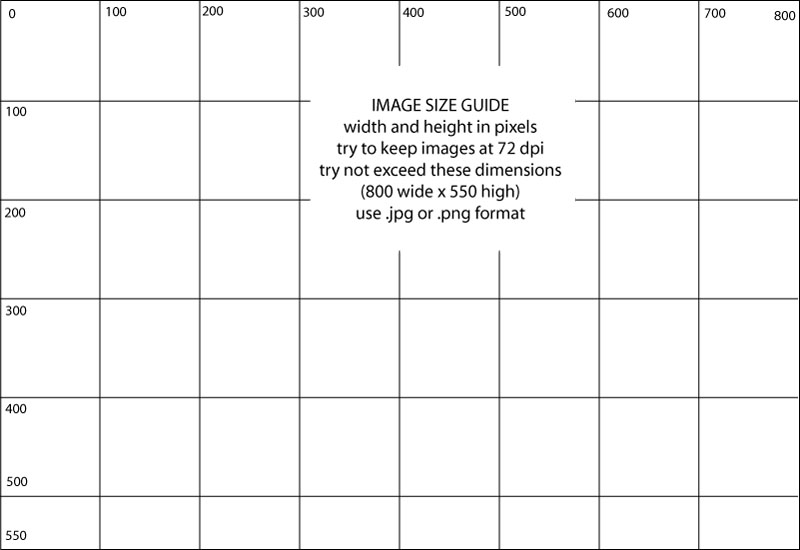
I was wondering how well blogs would work for image uploading for a student project, so this is a test.
It is an 800 x 550 pixel image, 72 dpi, 76 kb jpeg. Uploaded using the "small thumbnail", center image. This is the maximum size that fits in a MediaWiki page, displaying on a 1024x768 monitor.
This also gets also in the issue of how to best present students' images for the purpose of class assignment, in a linear fashion (PowerPoint, blog), or image-set (Flickr, wiki). I don't think there is a mature image-display-collection tool out there yet, that can be hosted locally at an institution, without a lot of time or expense, that has all the features we want.
Gallery2 seems a good "home-brew" flickr candidate, but I have not heard of many higher-ed institutions adopting it, and there is a bit of the "herd instinct" at work in higher ed. Having bucked it enough times, I'm not in the mood now...
Looking ahead to video, I want to analyze the code to this
http://mylifewithbadenglish.blogspot.com/
We can host the videos on one of our servers, and just link to them from our blogs.
My first post
Ok, I've started a few test blogs with Apple's Weblog Server, included in OSX Server. Seems great for creating podcasts, but not many features for just a blog. So, am testing Blogger. I'm wondering right now about these features:
1. Is it free to use without any ads showing up?
2. Can images be easily loaded (a bit of a bear in Weblog Server)
3. How about video and audio clips? Formats, size limitations?
4. How does the blog transfer to a podcast?
5. Can I edit my posts at a later time?
6. Comment moderation? Getting spammed?
7. Suitability for instruction. Jean-Claude Bradley at Drexel University seems to use it pretty well.
1. Is it free to use without any ads showing up?
2. Can images be easily loaded (a bit of a bear in Weblog Server)
3. How about video and audio clips? Formats, size limitations?
4. How does the blog transfer to a podcast?
5. Can I edit my posts at a later time?
6. Comment moderation? Getting spammed?
7. Suitability for instruction. Jean-Claude Bradley at Drexel University seems to use it pretty well.
Subscribe to:
Posts (Atom)